Full Mouth Rehabilitation
Clinically reviewed by Marilyn Gaylor, DDS, AACD Accredited Dentist
Years of wear, old dental work that has failed, cracked or missing teeth, and a bite that no longer feels right rarely happen one tooth at a time, and they are rarely fixed that way. Full mouth rehabilitation is a planned restoration of the teeth, bite, and gum health together, designed to help you chew comfortably, protect what remains of your natural teeth, and restore a smile that looks like your own. Dr. Marilyn Gaylor personally examines, diagnoses, and treats every full mouth rehabilitation patient in her Atlanta practice, from the first bite evaluation through the final restoration.
Complex restorative care depends on understanding how the jaw joints, muscles, and teeth work together, and that has been the center of Dr. Gaylor’s postgraduate education. She completed more than a decade of advanced restorative study at the LD Pankey Institute, trained in occlusion and bite harmony at The Dawson Academy, and is former Visiting Faculty at the Spear Institute for Advanced Dental Education. A 1984 graduate of the University of Tennessee School of Dentistry, she also holds Accreditation from the American Academy of Cosmetic Dentistry and is a Fellow of the Georgia Dental Association.
Julie S.“Dr. Gaylor has been my dentist since around 1996. She has always done an amazing job. She adjusted my bite the year before last, no headaches since then. Highly recommend her”
What Is Full Mouth Rehabilitation?
Full mouth rehabilitation, sometimes called full mouth reconstruction, rebuilds or replaces most or all of the teeth in both the upper and lower jaws. Unlike a smile makeover, which focuses mainly on appearance, a rehabilitation starts with function. The goal is a stable bite that distributes chewing forces evenly, healthy gums that support the restorations, and teeth that look natural and are built to last.
Each plan is custom. One patient may need crowns on worn teeth and a new bridge, while another may need gum disease treatment, orthodontic alignment, implant restorations, and new dentures. Dr. Gaylor sequences the work so that each stage prepares the mouth for the next.

Signs You May Benefit From Full Mouth Reconstruction
Patients often come in with several concerns at once, which is usually a sign that a coordinated plan will serve them better than repairing teeth one by one:
Teeth that are worn short, flat, or thin from grinding, clenching, or acid erosion
Multiple cracked, chipped, or broken teeth
Several old crowns or fillings that are failing or need replacement
Missing teeth, or loose dentures and partials
Jaw soreness, headaches, or a bite that feels uneven or has changed over time
Gum disease that has affected the support around several teeth
A smile that looks older than you feel because the teeth have become shorter or darker
Case #1
Full Mouth Rehabilitation
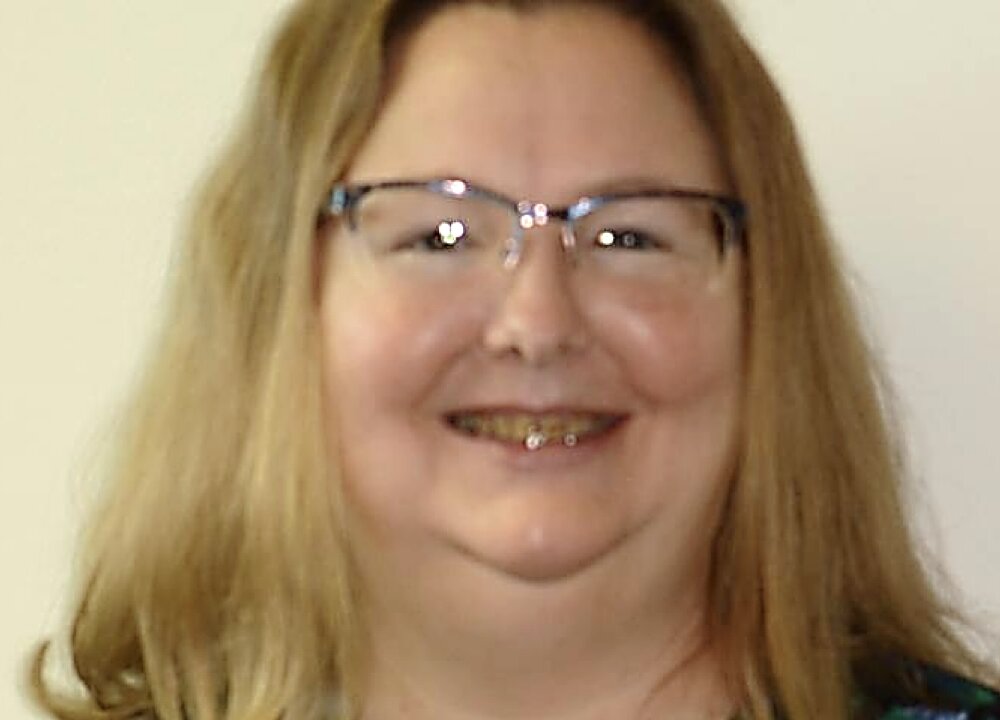
Before
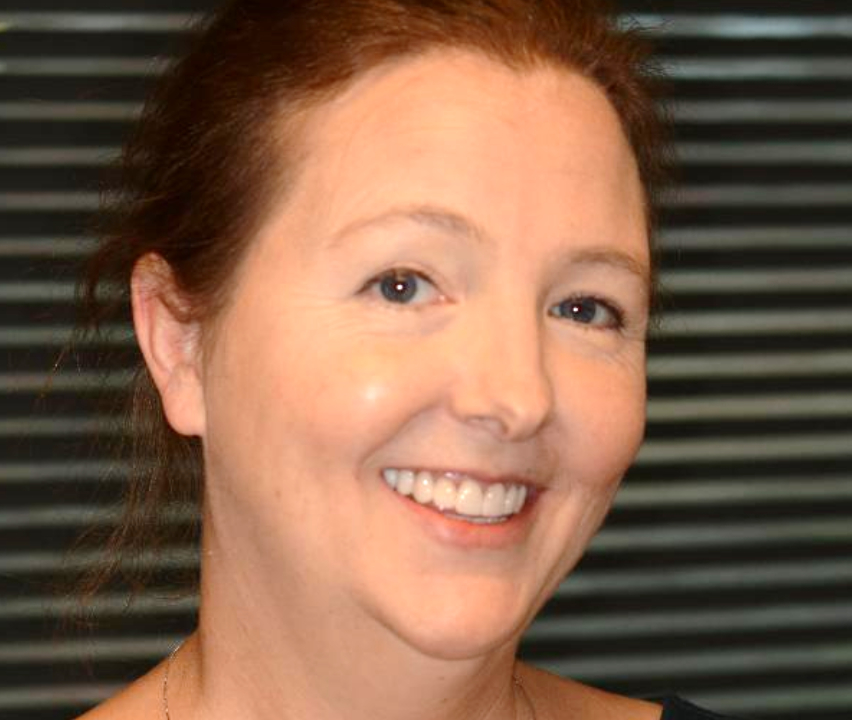
After
Case #2
Full Mouth Rehabilitation
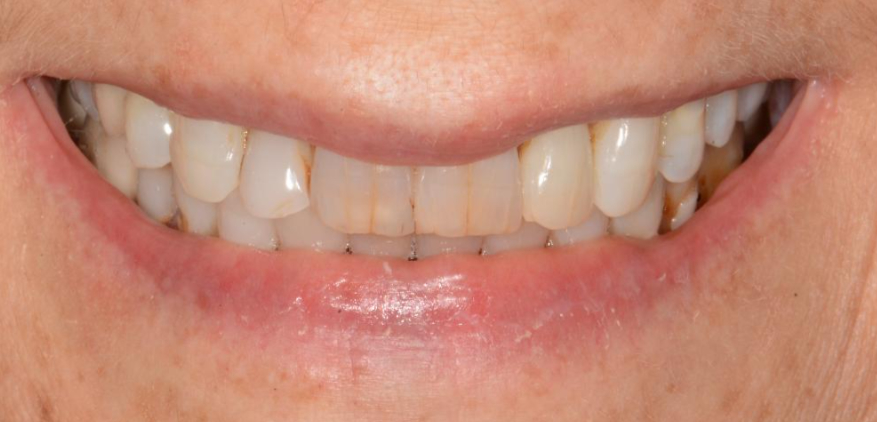
Before
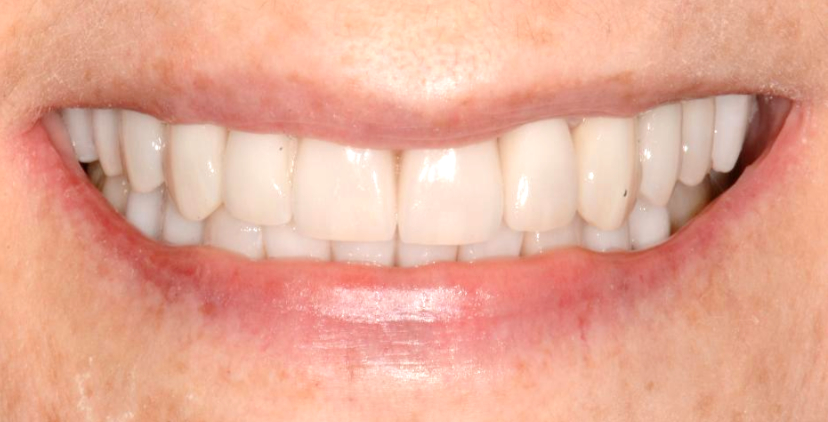
After
Case #3
Full Mouth Rehabilitation
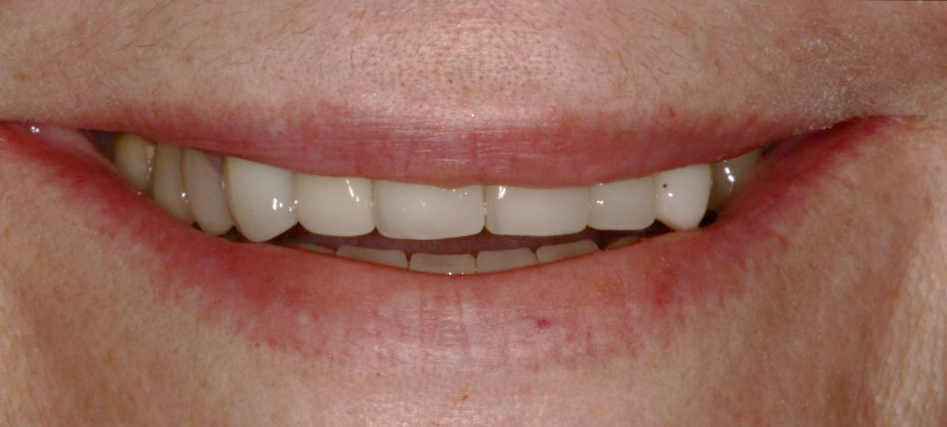
Before
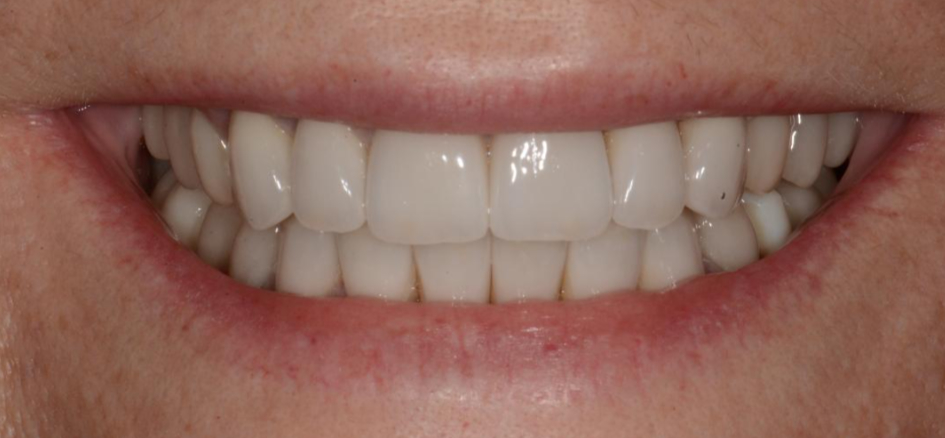
After
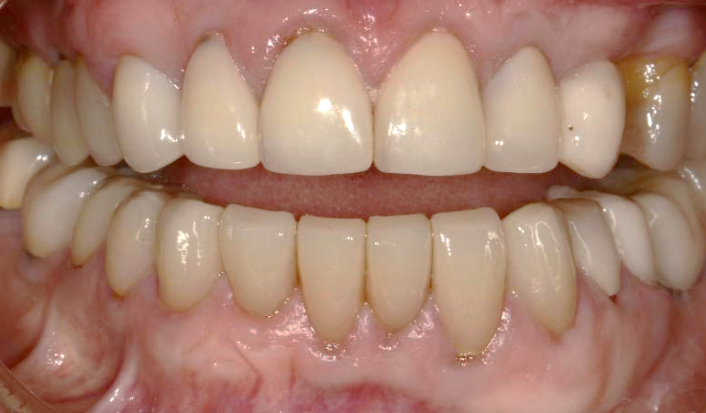
Before
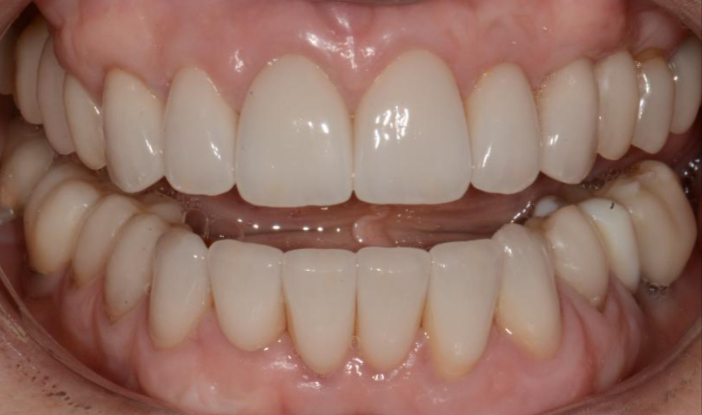
After
How Dr. Gaylor Diagnoses and Plans Your Rehabilitation
A lasting result depends on finding the cause of the damage, not just repairing it. If worn teeth are rebuilt without addressing the bite or nighttime grinding that wore them down, the new restorations are exposed to the same forces. For this reason Dr. Gaylor spends more time on diagnosis than on any other stage.
Your evaluation typically includes a thorough examination of the teeth, gums, jaw joints, and chewing muscles, along with digital X-rays, photographs, and models or scans of your teeth. Dr. Gaylor studies how your teeth come together and how your jaw moves, then presents a written plan that explains what she recommends, why, and in what order. When more than one reasonable approach exists, she walks you through each option, including the more conservative ones.
Treatments Often Included in Full Mouth Rehabilitation
The treatments in your plan depend on your diagnosis. Common components include:
- Dental Crowns: Metal-free crowns rebuild teeth that are worn, cracked, or heavily filled.
- Porcelain Veneers: Thin porcelain restores the front surfaces of teeth that are structurally sound.
- Dental Bridges: A fixed bridge replaces one or more missing teeth using neighboring teeth for support.
- Dental Implant Restorations: Crowns, bridges, or dentures are attached to implants placed by a surgical specialist.
- Dentures and Partial Dentures: Removable options replace multiple missing teeth when fixed restorations are not suitable.
- Gum Disease Treatment: Healthy gums are established first, sometimes with the Fotona LightWalker laser.
- Invisalign Clear Aligners: Moving teeth into better position can reduce how much tooth structure must be prepared.
- Occlusal Guards: A custom night guard helps protect new restorations from grinding and clenching.
Dr. Gaylor provides implant restorations but does not surgically place dental implants. When implants are part of your plan, she coordinates with a trusted surgical specialist for placement and then designs and places the final teeth herself.

What to Expect During Treatment
Full mouth rehabilitation is completed in phases over several months, and sometimes longer when gum treatment, orthodontics, or implant healing is involved. Any active disease or infection is treated first. In many cases Dr. Gaylor then places provisional (temporary) restorations so you can live with the new bite, shape, and length of your teeth before anything is made permanent. This allows adjustments to comfort, speech, and appearance before the final restorations are fabricated.
Local anesthetic keeps treatment comfortable, and sedation dentistry is available for patients who feel anxious or prefer fewer, longer appointments. Oral sedation may be an option, and IV sedation is administered and monitored by an anesthesiologist while Dr. Gaylor performs your dental treatment. After your final restorations are placed, regular checkups and cleanings help protect your investment over the long term.
You can view completed cases in the full mouth rehabilitation gallery. Every mouth is different, and results vary from patient to patient.
Frequently Asked Questions About Full Mouth Rehabilitation
-
A rehabilitation is driven by function, such as restoring worn or missing teeth and correcting the bite, while a smile makeover is driven mainly by appearance. Many rehabilitation patients also see a significant cosmetic improvement as part of the process.
-
Most cases take several months. Timing depends on whether gum treatment, orthodontics, or implant healing is needed, and Dr. Gaylor gives you an estimated timeline with your written plan.
-
No. Dr. Gaylor restores implants with crowns, bridges, or dentures after a surgical specialist places them, and you can see examples in the implant gallery.
-
In most cases, yes. Provisional restorations protect your teeth and let you test the new bite and appearance before final restorations are made.
-
Longevity depends on the materials used, your bite, your home care, and whether you grind your teeth. Wearing a night guard when recommended and keeping regular visits both help restorations last as long as possible.
-
Cost depends entirely on the treatments your case requires. After your examination, Dr. Gaylor’s team provides a detailed estimate and reviews any available insurance benefits and payment options with you.

Why Choose Dr. Gaylor for Full Mouth Rehabilitation
- Advanced Occlusion Training: Study at the LD Pankey Institute and The Dawson Academy focuses on how the bite, joints, and muscles work together.
- One Dentist Throughout: Dr. Gaylor personally examines, diagnoses, plans, and performs your restorative treatment.
- Cause Before Repair: Wear, grinding, and bite problems are identified so new restorations are not exposed to the same damage.
- Conservative Sequencing: The least invasive effective option is considered at every stage of the plan.
- Natural-Looking Results: Restorations are designed to suit your face, your age, and your natural tooth shade.
- Comfort Options: IV sedation is available with an anesthesiologist for longer or more complex appointments.
Full Mouth Rehabilitation in Atlanta
If your teeth are worn, failing, or missing and you are ready for a plan that addresses the whole picture, Dr. Gaylor welcomes patients from Atlanta, Buckhead, and Vinings to her office at 3280 Howell Mill Road NW, Suite 335. To begin with a comprehensive evaluation, schedule a consultation with Dr. Gaylor. Gaylor.