Dental Implant Restorations
Dental implant treatment has two parts. A surgical specialist places the implant in the jawbone, and a restorative dentist designs and places the crown, bridge, or denture that you see and use every day. Dr. Marilyn Gaylor provides the restorative part of implant treatment. She does not surgically place implants, but she personally examines and diagnoses each patient, coordinates placement with a trusted oral surgeon or periodontist, and then designs and places the final restoration so it matches your natural teeth and fits your bite.
The restoration is what determines how an implant tooth looks, how it feels when you chew, and how well it holds up, which is where Dr. Gaylor’s training is focused. She completed more than a decade of advanced restorative study at the LD Pankey Institute, trained in occlusion at The Dawson Academy, and holds Accreditation from the American Academy of Cosmetic Dentistry, with a published case in the Journal of Cosmetic Dentistry. She has practiced dentistry since graduating from the University of Tennessee School of Dentistry in 1984.
Julie S.“Dr. Gaylor has been my dentist since around 1996. She has always done an amazing job. She adjusted my bite the year before last, no headaches since then. Highly recommend her”
What Is an Implant Restoration?
A dental implant is a small titanium or ceramic post that serves as a replacement tooth root. After it is placed, the implant typically needs several months to bond with the surrounding bone. Once healed, Dr. Gaylor attaches an abutment, the connector piece, and the final restoration. Depending on how many teeth are missing, the restoration may be a single crown, a bridge, or a denture.

Types of Implant Restorations
Single Implant Crowns
One custom crown replaces one missing tooth without altering the neighboring teeth.
Implant-Supported Bridges
Two or more implants support a bridge that replaces several teeth in a row.
Implant-Retained Dentures
A denture attaches to implants for better stability than a conventional denture.
Full Arch Restorations
A fixed set of teeth is attached to several implants to replace an entire arch.
Case #1
Central Incisor
Implant Crown
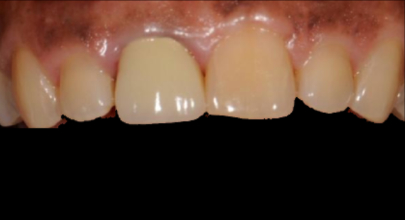
Before
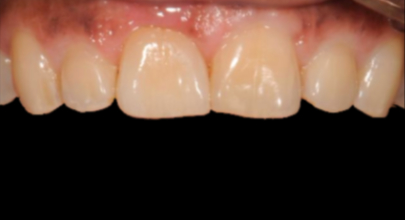
After
Case #2
Lateral Incisor
Implant Crown
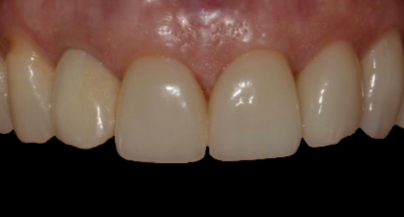
Before
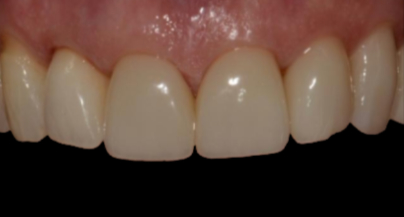
After
Common Reasons to Choose an Implant Restoration
- Replacing a single missing tooth without preparing the adjacent teeth for a bridge
- Improving the stability of a loose or uncomfortable denture
- Restoring chewing comfort and confidence after tooth loss
- Helping maintain jawbone in the area of a missing tooth, since bone tends to shrink where a tooth root is lost

What to Expect with Implant Restoration
Treatment begins with an examination, X-rays or 3D imaging, and a plan developed together with your implant surgeon. After the surgeon places the implant and it has healed, which usually takes several months, you return to Dr. Gaylor. She takes impressions or scans, selects the shade and shape of your new tooth, and works with a dental laboratory to fabricate the restoration. At the final visit she places the restoration and adjusts your bite for comfort. Temporary teeth are often available during the healing period.
Implant restorations need regular brushing, flossing, and professional cleanings, just like natural teeth. Smoking, uncontrolled diabetes, and untreated gum disease can increase the risk of implant problems, and a night guard may be recommended if you grind your teeth. You can see completed cases in the implant gallery.
Clinically reviewed by Marilyn Gaylor, DDS, AACD Accredited Dentist
Frequently Asked Questions About Implant Restorations
-
No. Dr. Gaylor does not surgically place implants. An oral surgeon or periodontist places the implant, and Dr. Gaylor designs and places the crown, bridge, or denture that attaches to it.
-
In many cases, yes. Dr. Gaylor evaluates the implant and the surrounding gum and bone, and she may need information about the implant system from the surgeon who placed it.
-
Many implant restorations last for years with good care, though the crown or denture may eventually need repair or replacement due to normal wear. Longevity depends on your bite, home care, and overall health.
-
Dr. Gaylor matches the shade, shape, and translucency of your restoration to your natural teeth. You can see examples in the implant gallery.
-
Yes. Implant restorations are often combined with crowns, bridges, or veneers as part of full mouth rehabilitation.
-
Coverage varies. Some plans cover the restoration even when they do not cover implant surgery, and Dr. Gaylor’s team can help verify your benefits.

Why Choose Dr. Gaylor for Implant Restorations
- Honest Candidacy Review: Gum health, bone support, and medical factors are evaluated before treatment is recommended.
- Restorative Focus: Advanced training at the LD Pankey Institute centers on restorations that are comfortable, functional, and durable.
- Coordinated Care: Dr. Gaylor plans your treatment together with the implant surgeon from the start.
- Bite-Centered Design: Training at The Dawson Academy guides how each restoration fits your bite.
- Natural-Looking Results: Shade and shape are selected to blend with your surrounding teeth.
- One Restorative Dentist: Dr. Gaylor personally examines, diagnoses, and restores your implant.
Dental Implant Restorations in Atlanta
If you have an implant ready to be restored or are considering implants to replace missing teeth, Dr. Gaylor welcomes patients from Atlanta, Buckhead, and Vinings to her office at 3280 Howell Mill Road NW, Suite 335. To discuss your restoration, schedule a consultation with Dr. Gaylor.